Sauce Bosses: The Real Reason Your Favorite Burger Hits Different

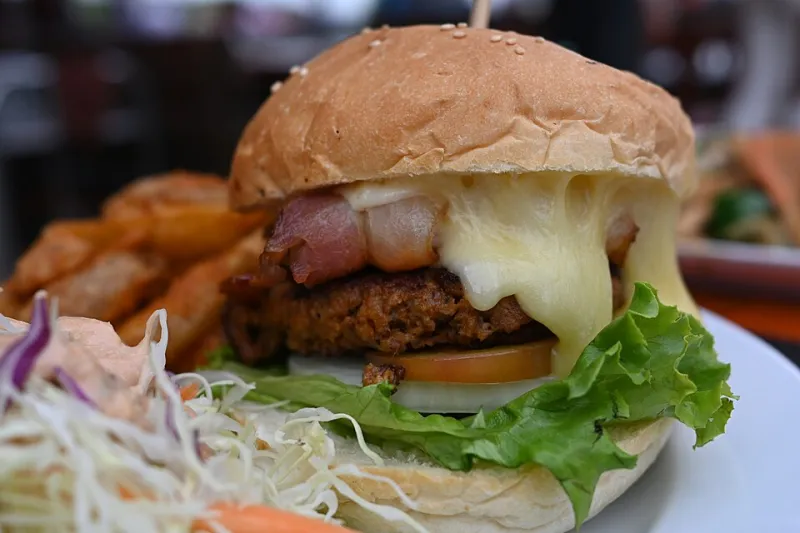
Photo: Sebastian Ballard, CC BY-SA 2.0, via Wikimedia Commons
Let's be honest for a second. When most people think about what makes a great burger, they go straight to the beef — the grind, the fat ratio, the sear. And sure, that stuff matters. But if you've ever bitten into a perfectly cooked patty slapped between two plain buns with zero sauce and zero toppings, you already know: something's missing. The condiments aren't a supporting act. They're co-headliners.
At Burger 51, we're all about bold flavors and no compromises, which means we take the full stack seriously — from bottom bun to top. So let's talk about what's really going on when you load up a burger with the right (or wrong) combination of sauces, pickles, and garnishes.
It's Actually Science (The Fun Kind)
Flavor pairing isn't just chef talk — there's genuine chemistry behind why certain combinations work. A burger patty is rich, fatty, and savory. On its own, it can tip toward one-dimensional. That's where acidity steps in. A dab of yellow mustard or a handful of bread-and-butter pickles cuts through the fat and resets your palate between bites, which is exactly why you keep going back for more without feeling overwhelmed.
The same principle applies to heat. A smear of sriracha mayo or a chipotle aioli introduces capsaicin, which triggers a mild endorphin response. Translation: spicy condiments literally make eating your burger feel good. That's not marketing. That's biology.
Then there's the umami layer. Condiments like Worcestershire-spiked ketchup, fermented hot sauce, or even a swipe of miso butter add depth that amplifies the beefiness of the patty rather than competing with it. When chefs talk about building a burger that "tastes like more than the sum of its parts," this is what they mean.
How America Sauces Its Burgers
One of the most underrated things about American burger culture is how regional it gets when you zoom in on toppings. The coasts and the heartland aren't exactly reading from the same condiment playbook.
In the South, comeback sauce — a tangy, slightly spicy blend of mayo, ketchup, and hot sauce — shows up on burgers from Alabama to the Carolinas. It's got a cult following for a reason. Meanwhile, Texas leans hard into jalapeños and barbecue sauce, often a smoky, molasses-forward variety that pairs with brisket-blended patties.
Head to the Midwest and you'll find a love affair with yellow mustard that borders on religious devotion. The classic smash burger culture there often keeps it simple: mustard, onions, pickles. No frills, maximum satisfaction. Meanwhile, California has gone full artisan — expect avocado crema, house-fermented hot sauce, and herb aiolis that read more like something off a bistro menu than a burger joint.
The Pacific Northwest has embraced umami-forward toppings in a big way, with teriyaki glaze and pickled daikon showing up alongside more traditional options. And in New York, the everything-bagel-seasoned spread has made a surprising crossover onto burgers at several gourmet spots.
The point isn't that one region is doing it better. It's that condiments are where local food identity lives on a burger. They're the fingerprint.
What the Pros Are Putting on Their Burgers Right Now
We've talked to enough burger chefs to know that the most exciting stuff happening in gourmet burger kitchens isn't about the meat — it's happening in the sauce station.
One recurring theme: fermented and pickled elements are everywhere. Kimchi aioli, pickled fresno chiles, fermented black garlic mayo — these bring an acidic brightness plus a complexity that plain condiments just can't match. The fermentation process creates flavor compounds that interact with the fat in the patty in ways that feel almost musical.
Another trend picking up serious steam: sweet-heat combinations. Honey sriracha, pepper jelly with cream cheese, fig jam alongside sharp cheddar — the interplay between sweet and spicy creates a tension that keeps every bite interesting. It's the kind of thing that makes you stop mid-chew and think, wait, what is that?
And then there's the underdog of the condiment world finally getting its due: compound butters. A swipe of herb butter or truffle butter on a toasted bun adds richness and aroma that elevates the whole experience before you even get to the patty. It's a small thing with a disproportionate impact.
The Garnish Is Not Decoration
Here's where a lot of home cooks and even some restaurants get it wrong: treating garnishes like they're just there for looks. The shredded iceberg on a classic diner-style burger isn't aesthetic — it's textural contrast. The crisp, cool crunch against a hot, juicy patty is doing real work.
Same goes for tomato. A mealy, flavorless tomato slice is worse than no tomato at all. But a thick-cut heirloom tomato in peak summer? That's acidity, sweetness, and moisture all in one bite. The garnish is pulling its weight.
Onions deserve their own paragraph. Raw onions bring sharpness and bite. Caramelized onions bring sweetness and depth. Crispy fried onion strings bring crunch and a savory pop. These are three completely different flavor experiences, and choosing between them isn't casual — it's a statement about what kind of burger you're building.
Building Your Own Signature Stack
If you're putting together a burger at home and want to think about condiments more intentionally, here's a simple framework:
- Fat needs acid. Always include something that cuts through richness — pickles, mustard, a vinegar-based hot sauce.
- Build in at least one textural contrast. Crunchy, creamy, crispy — pick at least two textures in your toppings.
- Don't double up on the same flavor note. If your cheese is sharp and tangy, your sauce shouldn't be too. Balance it with something sweeter or smokier.
- Consider the bun. A brioche bun is already buttery and slightly sweet, so rich sauces can tip into excess. A potato roll is more neutral and can handle bolder condiments.
The burger is a canvas. The patty is the foundation. But the condiments? That's where your personality shows up. Don't phone it in.