Meat, Heat, and Magic: What Actually Goes Into Building the Perfect Burger Patty
Let's be honest — not all burgers are created equal. You've had the dry, crumbly ones that taste like cardboard wrapped in a bun. And then you've had that burger. The one that's juicy, deeply savory, with a crust that crackles just right and a center that stays impossibly tender. The difference between those two experiences isn't luck. It's science.
At Burger 51, we're obsessed with what makes a truly great burger, and that obsession goes way deeper than toppings and sauces. It starts with the patty itself — specifically the meat you choose, the fat content you're working with, and the temperature you cook it to. Get these three things right, and everything else falls into place.
Grass-Fed vs. Grain-Fed: It's Not Just a Marketing Thing
You've seen both labels at the grocery store, and maybe you've wondered if it actually matters. Short answer: yes, it really does — especially when it comes to flavor.
Grain-fed beef, which makes up the majority of beef sold in the US, tends to have a milder, buttery flavor profile. The cattle are typically finished on corn or soy-based feed, which accelerates fat marbling and produces a consistent, crowd-pleasing taste. It's the kind of beef most Americans grew up eating, and there's a reason it dominates fast food and backyard cookouts alike.
Grass-fed beef, on the other hand, is leaner and carries a more complex, slightly gamey flavor that some people describe as "beefier" or more mineral-forward. The fat composition is also different — grass-fed beef contains higher levels of omega-3 fatty acids and conjugated linoleic acid (CLA), which contribute to that distinctive taste. The tradeoff? Because it's leaner, it can dry out faster if you're not careful with your cook.
For gourmet burgers, many chefs blend the two — or specifically source grain-finished beef that spent time on pasture first. The goal is depth of flavor and juiciness. It's not one or the other.
The Fat Ratio Equation: Why 80/20 Is the Sweet Spot
Here's a number every serious burger person should have memorized: 80/20. That's 80% lean meat to 20% fat, and it's widely considered the gold standard for a juicy, flavorful patty.
Fat does a lot of heavy lifting in a burger. It carries flavor compounds that lean meat simply can't deliver on its own. It bastes the patty from the inside as it cooks, keeping the texture moist and tender rather than tight and chewy. And crucially, it's responsible for that satisfying sizzle when your patty hits a hot surface.
Go leaner than 80/20 — say, a 90/10 blend — and you're in dry burger territory unless you're extremely precise with your cooking. Go fattier than 75/25 and you risk flare-ups on the grill, excessive shrinkage, and a greasy mouthfeel that overwhelms everything else.
Some upscale burger spots blend different cuts to hit their ideal fat ratio. Chuck is the classic choice because it naturally sits right around that 80/20 mark. But brisket blends, short rib additions, and even a touch of dry-aged beef can push the flavor envelope while keeping the fat content in check. It's worth asking your local butcher about custom blends — you might be surprised what they can put together.
Temperature Is Everything — And We Mean Everything
You can start with the best beef in the country, but if you cook it wrong, you've wasted your money. Temperature is where most home cooks go sideways, and it's also where the gap between a decent burger and a genuinely great one becomes most obvious.
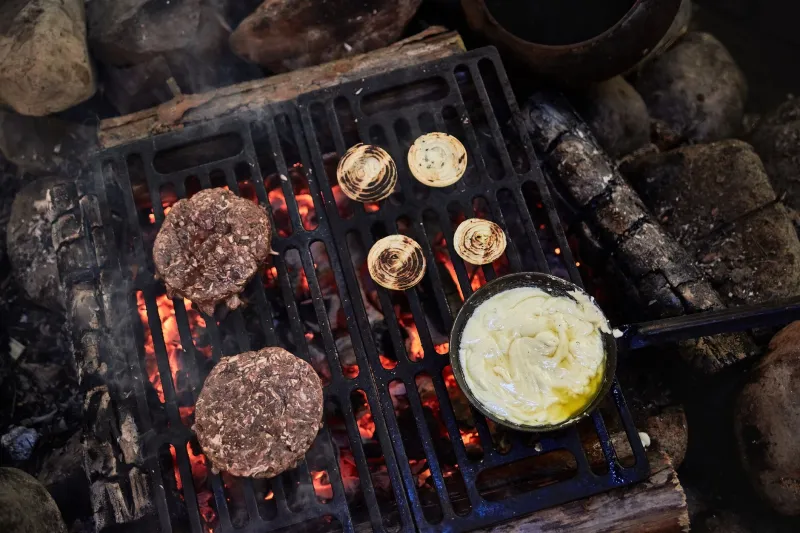
First, let's talk about the cooking surface. Whether you're using a cast iron skillet, a flat-top griddle, or a charcoal grill, you want it hot before the patty touches it. We're talking 400°F to 450°F at minimum. That high heat is what triggers the Maillard reaction — the chemical process that browns the surface of the meat and creates hundreds of new flavor compounds in seconds. Without it, you're steaming your burger rather than searing it, and you'll end up with a gray, sad patty instead of one with that gorgeous mahogany crust.
Now, internal temperature. This is where things get a little more nuanced, and frankly, where personal preference comes in.
- 125°F — Rare. A cool, red center. Not for everyone, but the fat is barely rendered and the texture is very soft.
- 130–135°F — Medium-rare. The sweet spot for flavor. The fat has started to render, juices are flowing, and the beef flavor is at its peak. Most gourmet burger chefs aim right here.
- 140–145°F — Medium. Slightly firmer, still juicy, with a pink center. A safe and satisfying option.
- 160°F+ — Well-done. USDA-recommended for ground beef (since grinding distributes surface bacteria throughout the meat), but at this temp you're working against yourself in terms of juiciness. If you go this route, fat content and resting time become even more critical.
One often-overlooked step: let your patty rest. Even just two to three minutes off the heat allows the juices to redistribute rather than spilling out the second you cut into it. It's a small habit that makes a noticeable difference.
Don't Forget the Cold Side of the Equation
Temperature doesn't just matter when you're cooking — it matters before you even fire up the grill. Cold fat holds together better during forming, which is why most chefs recommend keeping your ground beef as cold as possible right up until it hits the heat. Some even chill their mixing bowls and use frozen hands (or gloves) when forming patties.
And whatever you do, don't overwork the meat. Handle it as little as possible. Overworking ground beef compresses the proteins and squeezes out fat, resulting in a dense, tough patty. Form it gently, make a slight thumbprint indentation in the center to prevent doming as it cooks, and step away.
Putting It All Together
The perfect burger patty isn't about fancy tricks or exotic ingredients. It's about understanding the fundamentals and respecting them. Choose beef with the right fat content for your cooking method. Know where your meat comes from and how that affects flavor. Get your cooking surface ripping hot, hit the right internal temp, and give it a moment to rest before you build your masterpiece.
At Burger 51, this kind of thinking is baked into everything we do. Bold flavors don't happen by accident — they happen when you take the craft seriously, from the first grind to the last bite. Now go fire up that cast iron and put some of this to work.