From Coast to Heartland: 7 Regional American Burger Styles Worth Knowing

Photo: Variety Publishing Company, Public domain, via Wikimedia Commons
Ask ten people across the country to describe the ideal burger and you'll get ten genuinely different answers. Someone in New Mexico will mention green chile. A guy from Oklahoma will look at you sideways if you don't know what an onion burger is. A Californian will insist fresh avocado is non-negotiable. And somewhere in the Midwest, a cook is pressing a patty onto a flat-top griddle with absolutely no apologies.
America's burger landscape is one of the most interesting and underappreciated expressions of regional food culture in the country. At Burger 51, we're all about bold flavors and no compromises — and that means celebrating the traditions that have made burgers mean something different in every corner of the US.
Here's your guide to seven regional styles worth knowing, eating, and yes, trying at home.
1. The Oklahoma Onion Burger: Depression-Era Genius
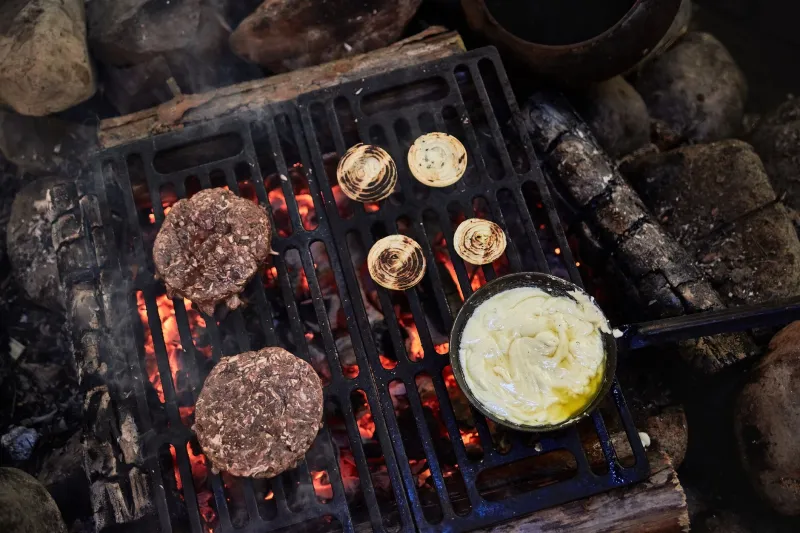
This one has a backstory. During the Great Depression, meat was expensive and operators needed to stretch their dollars. In El Reno, Oklahoma, cooks started pressing thin-sliced onions directly into burger patties on a flat griddle, letting the onions caramelize and essentially become part of the meat itself.
What started as an economic workaround turned into one of the most beloved regional burger traditions in the country. The result is a thin, smashed patty with deeply sweet, almost jammy onions fused right into the crust. It's served simply — yellow mustard, pickles, maybe some cheese — because it doesn't need much else.
To recreate it: use a very hot flat griddle, thin-slice your onions, and press them into the raw patty immediately before smashing. Let the onion cook into the meat, not just on top of it. That's the whole game.
2. The California Burger: Fresh, Stacked, and Unapologetic
California burger culture is built around freshness, and the influence of In-N-Out Burger — born in Baldwin Park in 1948 — is impossible to ignore. But the California style goes beyond any single chain. It's a philosophy: fresh, never frozen beef, bright produce, and a clean flavor profile that lets the ingredients speak for themselves.
Avocado or guacamole is a near-universal addition. Tomatoes are thick-cut and ripe. Lettuce is crisp and cool. The sauces tend to be lighter — Thousand Island-style spreads, not heavy aiolis — because the goal is balance, not richness overload.
The California style also embraced the animal-style modification (extra sauce, grilled onions, pickles) as a cult secret menu phenomenon, which says a lot about the culture's obsession with customization.
3. The Colorado Smashburger: Thin, Crispy, and Everywhere
Denver has become one of the most interesting burger cities in the country, and the smashburger — yes, the technique the chain popularized but didn't invent — is central to that identity. Colorado's take on the smash leans into thin, lacy-edged patties with maximum crust, often doubled up for a two-patty stack.
What makes the Colorado version distinct is the emphasis on quality beef blends and local ingredient sourcing, combined with the smash technique. You're getting that fast-food nostalgia hit alongside genuinely thoughtful ingredients. Craft beer cheese sauces, locally sourced green chiles, and Colorado honey mustards show up regularly.
At home, the smash technique is simpler than it sounds: a very hot cast iron or griddle, a ball of loosely packed 80/20 beef, and a firm press with a spatula within the first 30 seconds. Don't touch it again until the crust releases naturally.
4. The New Mexico Green Chile Cheeseburger: A State Obsession
New Mexico takes its green chile so seriously that it's essentially a state identity. The Hatch green chile — grown in the Hatch Valley of southern New Mexico — has a unique flavor that's smoky, fruity, and moderately spicy, and it goes on everything. Especially burgers.
The New Mexico green chile cheeseburger is a straightforward affair: a solid beef patty, roasted green chile (whole or chopped), and melted cheese — usually American or cheddar. The chile does the heavy lifting. You're not layering on a dozen toppings because you don't need to.
The state even has an official Green Chile Cheeseburger Trail, a self-guided road trip hitting iconic spots across New Mexico. That's how serious this is.
If you can't get Hatch chiles fresh, canned roasted Hatch chiles are widely available and hold up well. Roast them yourself in a dry skillet for a few minutes to revive some of that char.
5. The Midwest Steakhouse Burger: Thick, Beef-Forward, No Frills
In states like Kansas, Nebraska, and Iowa — where beef production is not an abstraction but a way of life — the burger reflects that relationship with the source material. Thick patties, often 6 to 8 ounces, cooked to a specific temperature (medium is the sweet spot in steakhouse culture), with toppings that complement rather than compete.
A classic Midwest steakhouse burger might feature a sharp aged cheddar, grilled onions, and a simple house sauce on a brioche or potato bun. The patty is the point. The beef flavor is the whole conversation, and everything else is just context.
This style also tends to favor coarser grinds — sometimes a chuck-and-short-rib blend — that maintain texture and resist turning into a dense meatball under heat. Seasoning is salt and pepper only. No fillers, no binders, no onion powder.
6. The Southern Fried Chicken Burger: A Crispy Cultural Statement
The South didn't just adopt the chicken sandwich trend — it created the template everyone else is copying. Southern fried chicken on a burger bun, with dill pickles and a honey-butter glaze or comeback sauce, is one of the most satisfying things you can eat.
What separates the Southern version from the fast-food imitations is the seasoning depth in the fry coating — buttermilk brines, cayenne, garlic, and sometimes a touch of hot sauce in the dredge — and the quality of the pickles. Bread-and-butter pickles, homemade dill chips, or spicy pickled jalapeños all make appearances depending on which state you're in.
Nashville hot chicken has pushed this style even further, adding a cayenne-and-lard paste applied post-fry that builds serious, lingering heat. If you're going that route, a cooling slaw and extra pickles aren't optional — they're structural.
7. The Hawaiian Burger: Sweet, Savory, and Sun-Soaked
Hawaii brings a distinct Pacific Rim influence to its burger culture. The signature move? A grilled pineapple ring. Teriyaki glaze. Sometimes a fried egg. The flavor profile leans into sweet-savory contrast in a way that feels completely natural once you've had it.
Hawaiian rolls — soft, slightly sweet, and pillowy — are often the bun of choice, which adds another layer of sweetness that works surprisingly well with salty, umami-rich proteins. Spam occasionally shows up as a patty component or topping, reflecting the island's complex food history.
This style is easy to adapt at home and genuinely crowd-pleasing. Grill your pineapple until you get caramelized edges, brush the patty with a simple teriyaki glaze in the last minute of cooking, and don't skip the egg.
Why Regional Matters
Food tourism is real, and burgers are a legitimate reason to cross state lines. But beyond the travel angle, understanding regional styles makes you a better cook and a more interesting eater. Each of these traditions developed for a reason — geography, economics, cultural influence, ingredient availability — and that history is baked into every bite.
At Burger 51, we think the best burgers are the ones that mean something. And America's regional traditions prove that a simple patty on a bun can carry a whole lot of story.