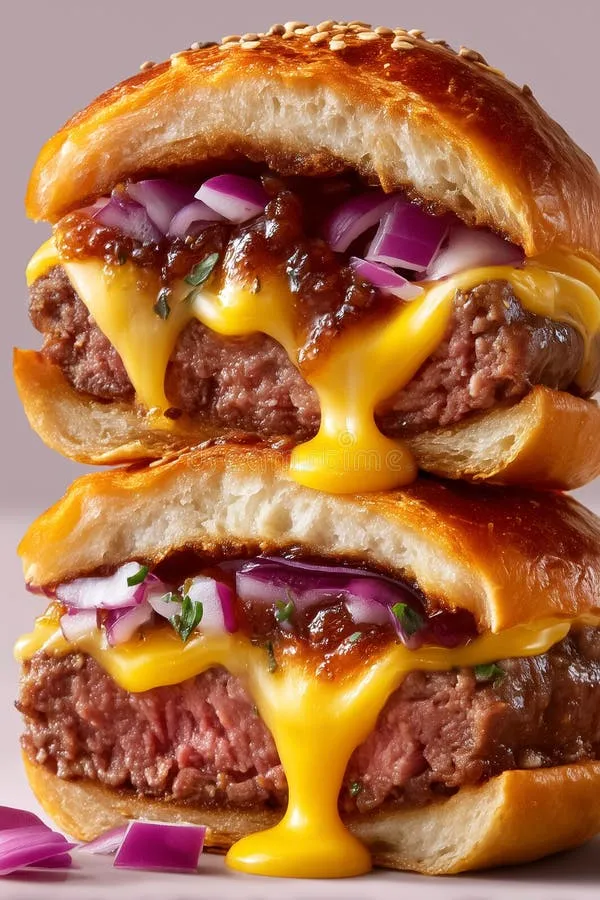
Structural Integrity Check: The Hidden Engineering Inside Every Great Burger
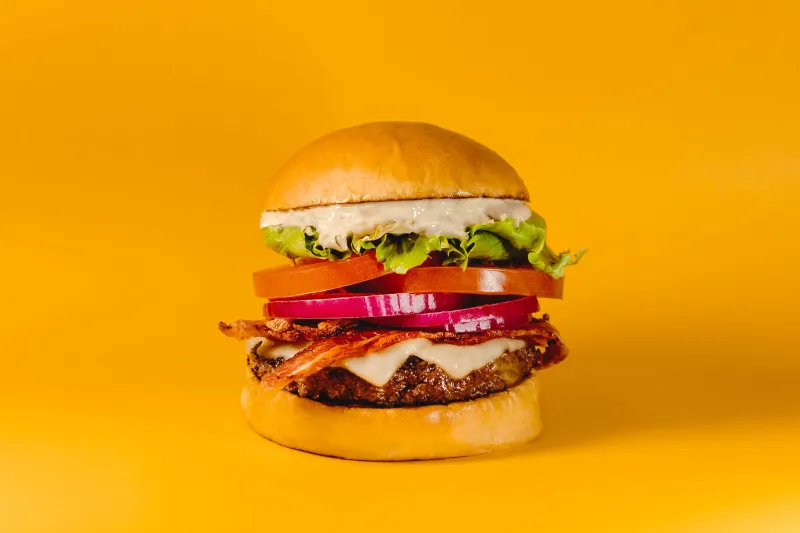
Somewhere in America right now, a beautiful burger is failing. The patty is sliding left, the tomato has escaped entirely, and the bottom bun is sagging like a folding chair at a family reunion. It didn't have to end this way.
According to the people who actually build burgers for a living, a great burger isn't just cooked — it's engineered. Every layer has a job, and when one of them slacks off, the whole stack pays for it.
Gravity Is Not Your Friend
Dr. Ellen Marsh, a food scientist who studies texture (yes, that's a real job), puts it bluntly: "A burger is a tall, moist, frictionless column. Everything about it wants to fail."
The main culprit is something engineers call the coefficient of friction — or in burger terms, how slippery your layers are. A slice of beefsteak tomato on a slick patty of melted cheese? That's a tectonic plate waiting to shift. Add a glossy sauce, and you've basically greased the slide.
The pros counter this with one word: texture contrast between layers. Rough against smooth. Dry against wet. Every interface should grip, not glide.
The Bottom Bun Is Doing the Heavy Lifting
Here's a truth the burger world doesn't say out loud enough: the bottom bun is the load-bearing wall of the entire structure. Fail there, and nothing above it matters.
Chefs fight sogginess a few ways:
- Toasting is non-negotiable. Heat firms up the crumb and creates a moisture barrier. A raw-bottom bun is a time bomb with a five-minute fuse.
- Fat as a raincoat. A thin swipe of mayo or butter on the bottom bun acts as waterproofing — it repels juices instead of absorbing them.
- The sacrificial layer. Some places put a leaf of lettuce or a slice of cheese under the patty, shielding the bread from direct juice contact. It's a drip line, not a garnish.
Layer Order: It's Not Random
Watch a serious line cook build a burger and you'll notice the sequence rarely changes. Sauce on both faces of the bun (it works like mortar). Cheese directly on the hot patty, where residual heat turns it into glue. Wet, heavy produce — tomato, pickles — close to the center of gravity, not teetering on top.
Lettuce, when it appears up top, is often there for structural reasons as much as flavor: the crinkled leaf creates air pockets and a rough surface that keeps the top bun from sliding off like a lid on a jar of oil.
"People think stacking is about looks," says one chef we spoke with at a busy fast-casual spot in Austin. "It's about making bite one and bite six feel the same."
Geometry Class: The Dome and the Dimple
Two pieces of geometry quietly hold the American burger together:
-
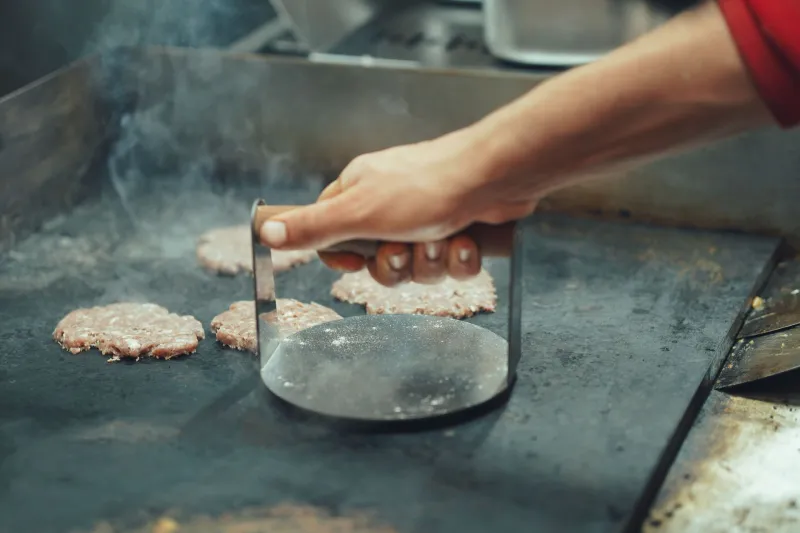
The patty dimple. Press a shallow divot into the center of raw beef before it hits the heat. Meat contracts as it cooks, and without the dimple, you get a dome that rocks on the bun like a bad pool table. Flat patty, stable platform.
-
The bun squish. A slightly domed top bun compresses the stack on first contact, temporarily bonding the layers. That's why the first bite of a great burger feels unified — everything moves together instead of in different directions.
The Squeeze Factor
There's a reason burgers are served slightly taller than your mouth can handle. The pros build in a compression zone: a bit of give in the stack that lets you press down gently before biting, compacting the layers into a single cohesive unit.
The mistake most home cooks make? Overstacking. Once you're past roughly five or six components, friction gains stop keeping up with height, and physics wins every time. Greatness, structurally speaking, is usually a shorter stack than Instagram suggests.
Build It Like You Mean It
Want to test this at your own grill this weekend? Run through a quick pre-flight checklist:
- Toast both bun faces, always
- Sauce the bottom and top for adhesion
- Dimple the patty before cooking
- Cheese on the patty while it's still screaming hot
- Heavy, wet ingredients near the middle
- Keep the total stack under control — tall is fine, wobbly is not
None of this requires fancy equipment or a culinary degree. It just requires accepting that your burger is a small building, and you're the contractor. Build sloppy, and it collapses by bite three. Build smart, and the last bite is as clean as the first.
That's the quiet difference between a good burger and a great one — and now you know exactly where to look.