Two Percent Away from Greatness: The Tiny Details That Decide Whether a Burger Wins or Fails
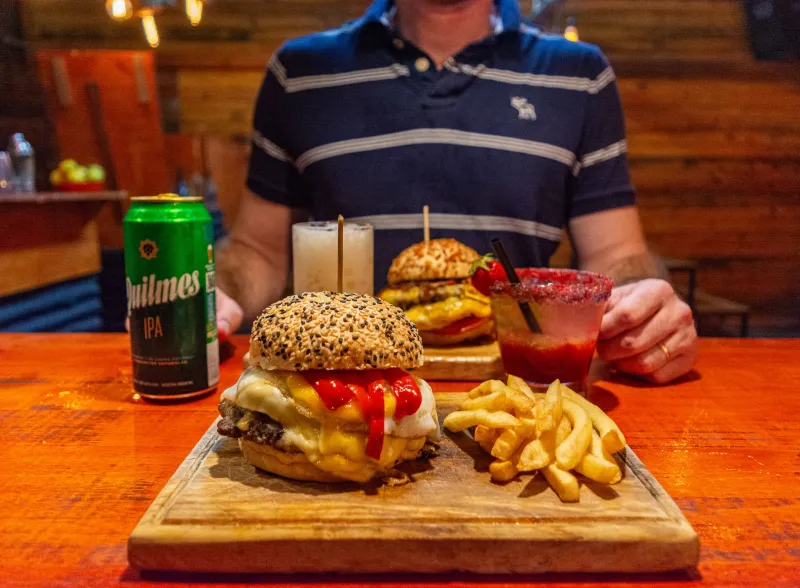
Here at Burger 51, we've got a name that's basically a mission statement. Fifty-one percent. A majority. The razor-thin edge by which something wins. And the longer we eat, cook, and obsess over burgers, the more we're convinced that's exactly how burgers work: not decided by blockbuster moves, but by a pile of tiny margins stacked on top of each other.
The gap between a transcendent burger and a forgettable one is rarely a secret sauce or a wagyu gimmick. It's thirty seconds of carryover rest. A pinch more salt than seems necessary. A smash that's one shade darker on the crust. Call it the 51/49 rule — most burgers are decided by the slimmest of margins, and the people who make legendary ones are the ones who sweat those margins on purpose.
The Grill Whisperers: Thirty Seconds Changes Everything
Ask any line cook who's worked a flat-top during a Friday rush and they'll tell you the same thing: timing isn't a suggestion, it's the whole game.
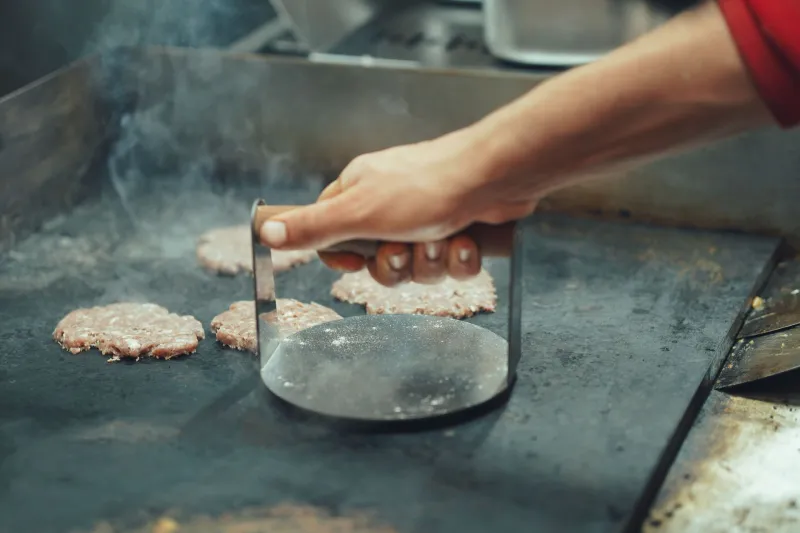
"People think the difference is the beef," says Marcus, a veteran grill operator at a beloved independent spot in Ohio. "It's not. It's when you flip. Flip too early and you never build the crust. Flip too late and you're steaming your own burger in its juices. We're talking about a window of maybe forty-five seconds."
That window matters because of the Maillard reaction — the browning process that creates hundreds of flavor compounds you can't get any other way. A patty that develops a deep, crackly crust tastes fundamentally more savory than an identical patty pulled a minute early. Same meat. Same cheese. Same bun. Completely different burger.
Home takeaway: Stop poking, prodding, and flipping early. Let the patty sit undisturbed until you see moisture pooling on the top surface — that's your flip signal, not the clock.
The Salt Math Nobody Talks About
Food scientists will happily tell you that seasoning is where the 51/49 rule gets almost mathematical. Most home cooks under-salt ground beef by a wide margin, and salt is the single cheapest flavor upgrade in existence.
The rough pro standard: about 1% salt by weight. On a quarter-pound patty, that's a little over a gram — roughly a generous half-teaspoon of fine salt spread across your batch. Sounds fussy, but here's the thing: undersalted beef doesn't taste "lightly seasoned." It tastes like nothing. Salt doesn't make beef taste salty; it makes beef taste more like beef.
One caveat the pros hammer constantly: salt right before the meat hits the heat. Salt too early and it draws out moisture and dissolves protein structure, giving you a springy, dense patty instead of a tender one.
Home takeaway: Weigh your salt once, remember what 1% looks like, and season at the last possible moment.
The Half-Degree Problem
Doneness is where the margins get genuinely tiny. The difference between a juicy medium burger and a gray, crumbly disappointment can be a few degrees of internal temperature — and patties keep cooking after they leave the heat.
That carryover cooking is the detail home cooks blow most often. A thick patty pulled off the grill at 130°F can climb past 140°F while resting. Pull it at 150°F and you're eating a well-done brick by the time it hits the bun. Pros pull patties early and let physics finish the job.
Resting matters too, even for thin patties. Thirty seconds lets juices redistribute instead of spilling out with your first bite. It's not precious chef theater — it's fluid dynamics working in your favor.
Home takeaway: Buy a cheap instant-read thermometer. It costs less than one restaurant burger and will do more for your cooking than any premium beef upgrade.
The Invisible Stuff: Toasted Buns and Layer Logic
Then there's the bun, quietly deciding half of all burger outcomes. A untoasted bun steams into soggy submission under a juicy patty. A properly toasted one — butter optional but encouraged — gets crisp enough to hold a barrier against moisture while staying soft inside.
And the order of operations on the build? It's not superstition. Cheese directly on the hot patty melts fully. Pickles against the patty rather than the bun stay put and don't make the bread soggy. Sauces on the bottom bun act as a moisture seal. Every placement choice is a small defense against structural collapse.
Home takeaway: Toast every bun, always. It's the highest-effort-to-payoff ratio in the entire burger build.
Why the Last 2% Is Worth Obsessing Over
Here's the honest truth: you can nail every one of these details and still just make a burger. But stack them — the crust, the salt, the pull temperature, the toast — and suddenly you're not making a burger. You're making the burger people ask you to make again.
That's the 51/49 rule in practice. Nobody notices a single one of these details when they're done right. They notice the result: a burger that just hits different, for reasons nobody at the table can quite articulate.
You can articulate them. You're the 51%. Now go cook like it.