Bread Wins: The Quiet Obsession With Burger Buns That's Changing How America Eats
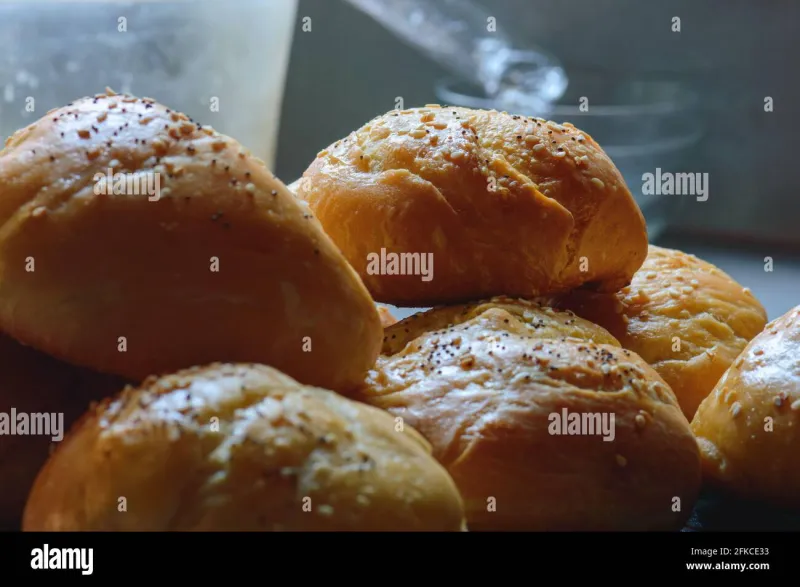
Photo: artisan burger buns fresh baked brioche potato rolls bakery close up, via c8.alamy.com
Let's be honest about something. When most people think about what makes a great burger, they think about the meat. Maybe the cheese. Possibly the sauce. The bun? It's almost an afterthought — the thing that holds everything together so you don't need a fork.
That attitude is changing fast, and the people changing it are some of the most serious burger makers in the country.
The Bun Problem Nobody Talked About
For decades, the standard burger bun was essentially designed to be invisible. Soft, slightly sweet, uniform, forgettable. Its entire job was structural — contain the burger, absorb a little grease, stay out of the way. The mass-produced sesame seed bun became so ubiquitous that most diners stopped registering it as a flavor element at all.
But here's the thing: a bun that's doing nothing is still doing something. It's adding texture — or taking it away. It's contributing sweetness, or not. It's holding up under pressure, or collapsing by the third bite. It's the first thing you touch and the last flavor that lingers. A bad bun doesn't just fail to help — it actively undermines everything underneath it.
Chefs building serious burger programs figured this out, and once you see it, you can't unsee it.
Artisan Partnerships and Why They're Worth the Effort
One of the most notable shifts in the gourmet burger world over the past several years has been the rise of restaurant-bakery partnerships. Rather than ordering commodity buns from a food service distributor, a growing number of burger spots are working directly with local or regional artisan bakeries to develop something specific to their menu.
The logistics aren't simple. Artisan bread doesn't behave the same way every day — humidity, temperature, and fermentation times create natural variation that mass production eliminates. Delivery schedules have to be tight because fresh-baked buns have a much shorter window than their shelf-stable counterparts. And the cost is meaningfully higher.
So why do it? Because the payoff is real and customers notice.
"When we switched to a bun from a local bakery that was making a custom potato roll for us, the feedback was immediate," says one burger chef operating a fast-casual concept in Chicago. "People couldn't always name what was different, but they kept saying the burger tasted better. The bun was doing more work than we realized."
That potato roll, for the record, was developed over three months of back-and-forth between the kitchen and the bakery — adjusting hydration levels, tweaking the butter content, dialing in the bake time to get a crust that held its structure without being too firm to compress naturally when you bite down.
What Makes a Bun Actually Work
If you've never thought about bun construction beyond "soft" or "not soft," here's a quick breakdown of what the best ones are actually doing.
Structural integrity. A bun needs to hold together through the full eating experience — which means it has to handle moisture from sauces, juices from the patty, and the physical compression of being held in two hands. Too dense and it fights the burger. Too soft and it disintegrates.
Crumb-to-crust ratio. The interior texture (the crumb) determines how the bun interacts with fillings. A tight, even crumb absorbs sauce slowly and maintains chew. An open crumb soaks through faster — great for some applications, disastrous for others.
Flavor contribution. A bun isn't neutral. Brioche adds butter richness and a hint of sweetness that plays well with savory, umami-forward builds. A potato roll brings a subtle earthiness and extreme softness. A pretzel bun introduces a malty, slightly bitter edge that cuts through fat. Each choice shapes the finished burger.
Toast response. How a bun takes heat on a flat-top or in a pan matters enormously. The ideal bun develops a light, golden crust on the cut side that adds texture without getting brittle — a thin layer of caramelized starch that acts like a moisture barrier while adding a little snap to the first bite.
Alternative Grains Are Having a Moment
Beyond the classic white flour bun, burger kitchens are experimenting with whole grain, rye, and heritage wheat varieties that bring more complex flavor profiles to the table. Einkorn wheat buns carry a nutty, slightly sweet character. Rye blends introduce an earthy depth that pairs surprisingly well with smoky or heavily spiced patties. Spent grain buns — made with grain left over from the brewing process — have become a favorite at burger spots attached to or partnered with local craft breweries.
These aren't gimmicks. They're genuine flavor decisions that reflect the same philosophy driving the rest of a thoughtfully designed burger menu: every component should be there for a reason.
The Data Behind the Dough
Beyond the craft argument, there's a real business case for investing in bun quality. Research on customer perception in the restaurant industry consistently shows that bread is one of the most emotionally resonant parts of a dining experience — even when people can't articulate why. A meal that starts with exceptional bread primes diners to evaluate everything that follows more favorably.
In the burger context, that translates directly. Customers who describe a burger as "the best I've ever had" are often responding to the full sensory package, not just the patty. And a bun that looks distinctive, smells like it came out of an actual oven, and holds together from first bite to last is a meaningful part of that package.
Repeat business, in particular, seems to be influenced by those kinds of details. The burger that's worth driving across town for isn't always the one with the most toppings — it's often the one where every single element, including the bread, feels considered.
How to Think About Your Own Bun Game
If you're building burgers at home and want to close the gap between backyard cookout and something genuinely special, the bun is one of the highest-leverage upgrades you can make.
Start by visiting a local bakery and asking what they'd recommend for a burger application. Many small bakeries are delighted by the question and will point you toward something far better than anything in the grocery store bread aisle. If you're feeling ambitious, potato rolls are one of the more approachable buns to make from scratch — the mashed potato keeps them tender even if you're not a confident baker.
Toast your buns. Always. A dry pan or a flat griddle over medium heat, cut-side down, for about 90 seconds. It takes almost no time and completely transforms the texture and flavor.
And pay attention to proportion. A thick, heavily doughed bun overpowers a thinner patty. A flimsy bun disappears under a tall stack. Match the bun to the build, and treat the bread like what it actually is: an equal partner in the best burger you've ever eaten.