No Tables, No Problem: The Invisible Burger Empire Delivering Straight to Your Door
Somewhere in a strip mall outside Phoenix — maybe between a nail salon and a defunct Blockbuster — a burger is being born. You can't walk in and order it. There's no neon sign, no booth with a wobbly table, no ketchup bottles to flip upside down. But on your delivery app, it looks every bit as legit as the burger joint you've been going to since college.
Welcome to the ghost kitchen era, where some of America's most cravable patties come from buildings with no dining room at all.
What Exactly Is a Ghost Kitchen?
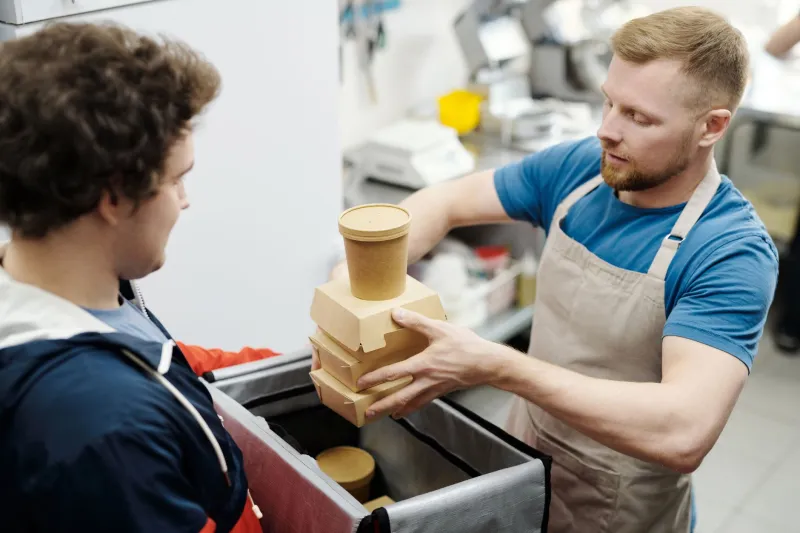
Strip away the jargon and the concept is simple: a ghost kitchen (sometimes called a cloud kitchen or virtual restaurant) is a food operation built entirely around delivery and pickup. Some occupy dedicated warehouse-style facilities where a dozen brands share one kitchen line. Others are "virtual brands" — a pizza place with a spare fryer suddenly starts selling burgers under a totally different name on DoorDash and Uber Eats.
The economics are hard to argue with. No dining room means no rent on prime corner real estate, no servers, no hostess stand. Labor is leaner, overhead is leaner, and a single kitchen can run three or four digital-only burger concepts at once, testing which one sticks. If the smash burger brand flops, you pivot to a patty melt concept by Friday without repainting a single wall.
For the restaurant industry, this isn't a fringe experiment anymore. It's a fundamental shift in how food reaches American stomachs — and burgers, the most delivery-friendly food in the country, are at the center of it.
How a Burger With No Address Wins You Over
Here's the interesting part: discovery. Traditional burger joints earn customers with location, signage, and word of mouth. Ghost kitchens earn customers through the app itself — the thumbnail photo, the name, the five-star rating, the limited-time deal that shows up at 6:47 p.m. when you're starving and indecisive.
That means the branding does the heavy lifting. Names are engineered to hit the algorithm just right — heavy on words like "smash," "stacked," and "grill." Menus are ruthlessly short, because a tight menu travels better and fries less badly. Everything about the burger, from the patty size to the sauce container design, is optimized for surviving a 20-minute ride in a Honda Civic.
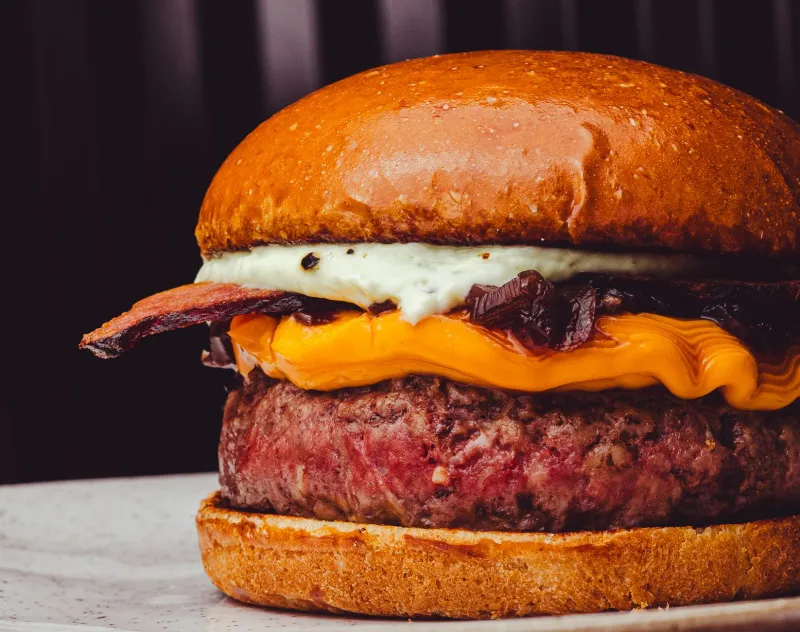
And honestly? Some of them are legitimately good. Delivery-native brands obsess over things traditional restaurants never had to think about: a bun that won't steam into a sponge, cheese that stays molten, packaging that vents instead of trapping moisture. There's a genuine craft emerging here, and it's shaped entirely by the reality that the first bite happens at your kitchen table, not theirs.
The Loyalty Question
But here's where things get philosophical for a burger site like ours. Can you be loyal to a restaurant you've never stood inside?
Loyalty at a classic burger spot is built on texture — and not just the patty's. It's the counter guy who knows your order. The smell that hits you at the door. The booth you always request. A ghost kitchen strips all of that away and leaves only the food. You're not loyal to a place; you're loyal to a listing.
That's a fragile kind of love. Apps are a fickle mistress — one bad delivery, one soggy order, and the customer scrolls on to the next four-star burger thumbnail. Ghost kitchen brands know this, which is why so many are now experimenting with physical touchpoints: pop-ups, food halls, even small pickup-only storefronts. The digital-first burger brands are discovering what the industry has known for a century — eventually, people want to see where their food comes from.
What It Means for the Classic Burger Joint
If you run a traditional burger stand, the ghost kitchen boom is either a threat or a masterclass, depending on how you look at it.
The threat is obvious: a virtual brand can undercut your prices because it doesn't pay for your dining room. But the masterclass part is more interesting. Delivery-only operators have forced the whole industry to think harder about how burgers travel, how menus photograph, and how digital ordering actually works. Plenty of beloved local spots have quietly adopted those lessons — tightening menus, upgrading packaging, and getting serious about their app presence — without giving up the tables and the personality that make them worth visiting in the first place.
The smartest operators on both sides are converging. Ghost kitchens are adding brick-and-mortar footholds. Legacy joints are adding delivery-first thinking. The burger, as always, is the common ground.
The Verdict From the Drive-Thru Window
So should you order from that burger brand with no address? We say yes — with eyes open. Some of these virtual concepts are turning out genuinely excellent smash burgers, and the competition is pushing everyone's game up a notch.
Just remember what you're buying into: a burger optimized for the app, not the experience. When one of them really wows you, do the brand a favor and find out if it has a face — a pop-up, a kitchen you can visit, a human who answers the phone. Because a great burger deserves more than a five-star rating. It deserves a home.
Even if that home, for now, is a building you'll never walk into.