Car Windows and Ketchup Packets: How the Burger Became America's First Family Meal
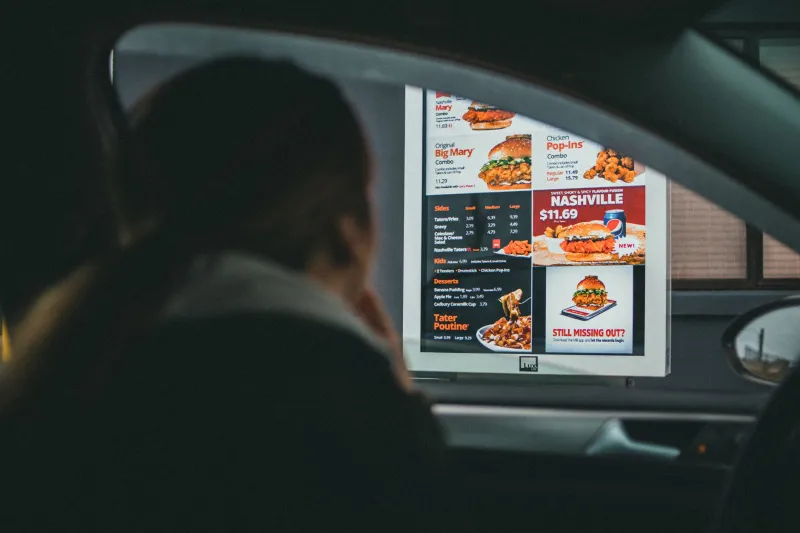
Ask a room full of Americans to name their first food memory, and you'll hear a surprising number of similar answers. A burger after a Little League game, ketchup smeared across a car seat. A paper-wrapped meal eaten during a family road trip somewhere on I-80. The Sunday drive that always ended at the same drive-thru window, where Dad ordered the same thing he always ordered and everybody in the back seat knew it by heart.
No other food in this country has done what the burger has done. Pizza comes close, sure. Fried chicken has its moments. But the burger is the one America keeps coming back to — not because it's fancy, but because it's reliable. It shows up. It feeds everybody. It never starts an argument.
The Original Car Food
The burger's rise as the family meal happened almost by accident, and it happened in a car. When the automobile boom hit postwar America, drive-ins popped up along every highway in the country. Carhops on roller skates, trays hooked to windows, burgers wrapped in paper so nothing dripped on the upholstery. The burger wasn't just convenient — it was practically engineered for the front seat of a '55 Bel Air.
"We used to say the burger was the only meal that could be eaten one-handed," laughs Ray Delgado, a retired franchise operator who spent 38 years running burger stands across Ohio and Indiana. "Steak needs a fork. Fried chicken needs a napkin and a prayer. But a burger? Kid in the back seat, both hands free, everybody's happy. That's the whole business model right there."
That one-handed portability turned out to be a bigger deal than anyone realized. It meant the burger could travel. And once food could travel, it stopped being about the table and started being about the moment — the trip, the game, the errand, the reward.
The Ritual, Not the Recipe
Spend enough time talking to burger families and you start noticing that nobody's really describing the food. They're describing the ritual.
"Every Friday after my daughter's soccer games, we'd hit the same spot," says Melissa Tran, a mom of three from suburban Denver. "Same order every time. My youngest would get the plain burger, no pickles, and the cashier knew it before we finished pulling up. When she left for college, she called me crying — not because she missed the burger exactly, but because she missed the routine."
That's the thing about the burger's role in American family life. It's less of a meal and more of a landmark. It marks the end of a season. The start of a road trip. The close of a long week. The burger is how families say "we made it" without actually saying anything at all.
And unlike most foods, it works across generations. Grandpa ate them. You ate them. Your kids eat them. The order might change — oat milk shake instead of a malt, a smash burger instead of a quarter pounder — but the ritual holds.
Why Nothing Has Replaced It
Here's a question worth asking: America has fallen in love with a hundred other foods over the decades. Sushi went mainstream. Tacos are everywhere. Poke bowls had their moment. So why is the burger still sitting shotgun?
A few reasons, according to the people who've spent their lives in the business.
It's the great neutralizer. Picky kids, adventurous adults, vegetarians (thanks to a genuinely decent wave of plant-based patties) — there's a version of the burger for everyone at the table. Try pulling that off with a curry.
It's affordable by design. Even in the gourmet era, a great burger costs a fraction of what a comparable restaurant meal would. The burger democratized dining out, and families noticed.
It's predictable in a good way. After a long day of travel or a tense playoff game, nobody wants a culinary adventure. They want the thing they know. The burger is the culinary equivalent of a hug from someone you trust.
"People think of burgers as boring," says Delgado. "Boring is the wrong word. Dependable. In my experience, dependable beats exciting nine times out of ten when you're feeding a family."
The Drive-Thru as America's Kitchen
There's a running joke that the minivan is the real family dining room in America, and honestly, the numbers back it up. Drive-thru windows do a staggering share of the country's family meal business, and burgers lead the pack at nearly all of them.
But something interesting has happened in recent years. The burger ritual has expanded, not shrunk. The same families that hit the drive-thru on Tuesdays are now hosting smash burger nights in their backyards. Gourmet burger spots have popped up in strip malls and downtown corners alike, and parents are bringing the drive-thru ritual to nicer tables — same food, better buns, same family in the booth.
The burger didn't lose its place when dining got fancier. It upgraded. That's the mark of a truly foundational food.
Still Driving After All These Years
Ask any franchise veteran what keeps the burger on top and they'll tell you the same thing: it never asked to be anything more than what it is. A patty, a bun, a handful of toppings, and the people you love in the seats around you.
The next time you're pulling out of a drive-thru with a paper bag on your lap and kids in the back arguing over who got the bigger fry order, take a second. You're not just eating dinner. You're participating in one of the longest-running family traditions this country has — one burger, one car window, one moment at a time.
And honestly? We wouldn't have it any other way.