Fifteen Dollars, Itemized: Where Your Gourmet Burger Money Actually Goes
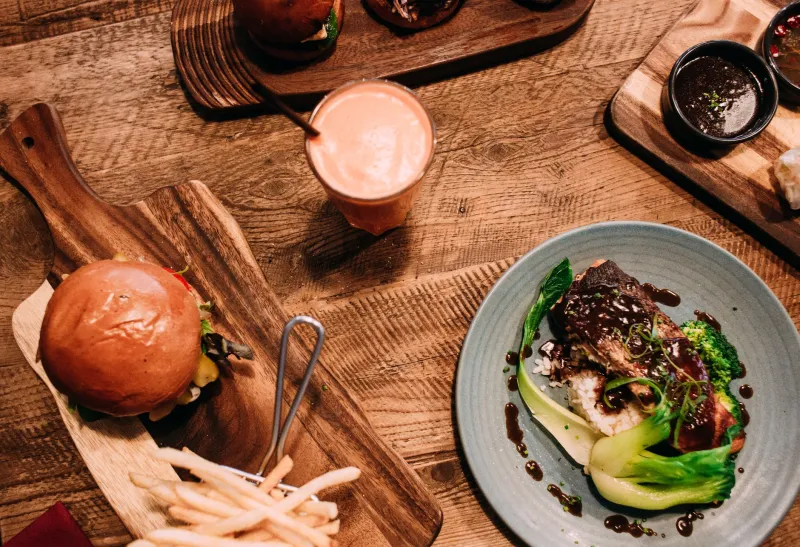
At a busy counter in 2026, the menu board reads $15.50 for a double cheeseburger with house sauce, pickles, and a pile of thin-cut onions. A customer pauses, does the mental math, and asks the question every operator has heard a thousand times: why does a burger cost that much? The honest answer is not a single villain. It is a stack of small, stubborn costs — and a few big ones — that have reshaped the gourmet burger business.
The Patty Is Only the Opening Bid
Start with beef. A six-ounce patty made from a custom blend of chuck, brisket, and short rib might cost a restaurant between $2.50 and $4.00 in raw product, depending on the market and the trim. That sounds manageable until you remember that beef loses weight on the grill. A six-ounce patty can shrink to four and a half ounces after cooking, and the kitchen paid for all six. Trim, testing, and waste add more. The patty is not the whole story, but it is the first line on the invoice.
Labor Is the Line Item You Cannot Compress
A burger moves through many hands. Someone preps the toppings. Someone grinds or portions the beef. Someone works the flat top. Someone builds the burger, wraps it, bags it, and hands it over. Someone washes the dishes. Even a counter-service spot with no waitstaff carries a full back-of-house payroll. Add wages, payroll taxes, benefits where they exist, and the cost of training people who may not stay a year. Labor often lands between 25 and 35 percent of a burger's price. On a $15 burger, that is roughly $4 to $5 before the first napkin is folded.
Rent, Utilities, and the Cost of Being Somewhere
A burger joint is a box full of expensive equipment. Refrigeration runs all day. Ventilation moves a lot of air. The flat top, fryer, and dish machine pull power. Rent depends on foot traffic, and foot traffic is exactly what a burger restaurant needs. In a busy urban corridor, rent can eat 10 to 15 percent of revenue. In a suburban strip center, it may be lower, but the customer count is different. Either way, the building is part of the burger.
Packaging, Fees, and the Invisible Ten Percent
Then come the costs diners rarely see. Clamshells, bags, foil, napkins, sauce cups, and labels. Card processing fees, typically 2 to 3 percent of the ticket. If the restaurant offers delivery through a third-party app, commissions can take a much larger bite. Packaging and fees can add another 5 to 8 percent to the true cost of serving a burger. None of these items make the burger taste better, but skipping them is not an option.
How Operators Build a Menu Around Price Anchors
Menu prices are not just math. They are psychology. A $19 double burger with bacon and a pile of onion rings makes the $15 burger look reasonable. A $9 single burger gives customers an entry point and gives the kitchen a way to move people up to fries and a drink. Operators call these price anchors, and they work because most diners do not calculate cost. They compare. The $15 burger is not competing with the raw cost of beef. It is competing with the $19 burger next to it and the $12 burger across the street.
Why the $9 Burger Still Exists
The $9 burger has not disappeared, but it usually comes from a different business model. Maybe the rent is lower. Maybe the menu is tiny. Maybe the patty is smaller, the toppings are simpler, and the volume is high. Maybe the restaurant uses a less expensive cut or a simpler blend. None of that automatically makes it worse. A $9 burger can be excellent if the kitchen respects it. The soul of a burger is not the price tag. It is the sear, the seasoning, the ratio, and the care.
What $15 Actually Buys
A $15 burger is not automatically a better burger. It is a burger that carries more cost. Sometimes that cost buys better beef, better bread, a cleaner room, or a staff that stays long enough to get good. Sometimes it buys a fancy address and a marketing budget. Diners do not need to audit the invoice, but they should ask what the price is doing. The best operators answer that question on the plate. The worst ones answer it with a chalkboard.
At Burger 51, we are not here to tell you that every $15 burger is worth it. We are here to tell you where the money goes — and why the $9 burger still deserves a place at the counter.